
This infographic was requested yesterday. It was already on my to-do list, but the request made it a priority. Feel free to ask; that's my suggestion.
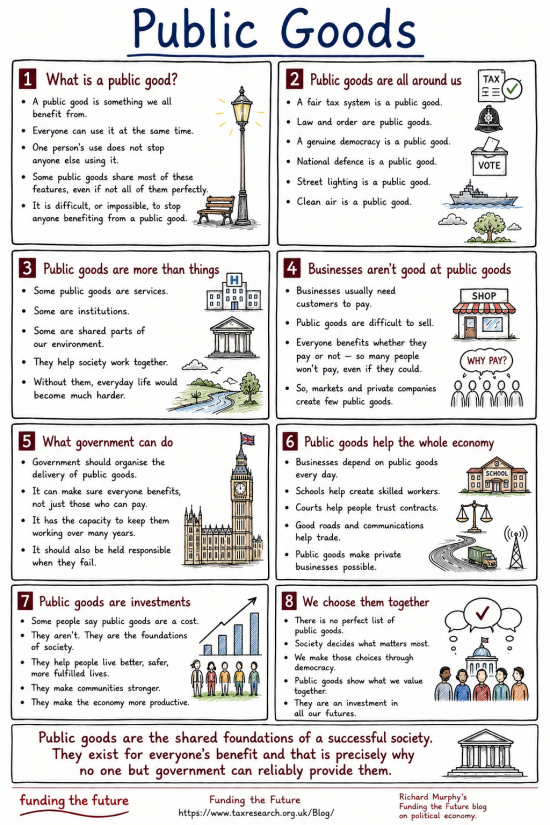
How to expand this image
If you press CTRL or Command and Plus (+) on your keyboard, your browser should increase the size of your page every time you do this. Press CTRL or Command and the Minus (-) key together to restore the screen to normal. I can get to at least 2 times the normal size by doing this.
How to download this image.
If you right-click the image, you should be given the option to download it to your computer. So long as you do so without a view to making a profit, you may do so without further permission. Commercial use requires consent. But if you just want to share it, do so with whoever and wherever you want. That is the purpose of these infographics.
The image library
We are planning a library of these images. It will be available soon.
Thanks for reading this post.
You can share this post on social media of your choice by clicking these icons:
There are links to this blog's glossary in the above post that explain technical terms used in it. Follow them for more explanations.
You can subscribe to this blog's daily email here.
And if you would like to support this blog you can, here:

 Buy me a coffee!

The library is a very good idea supporting a very good idea in my view.
We are working on it.
Thanks for the infographics!
What about a button to generate a pdf of the graphic as a simpler way of printing and downloading it (rather than right click)? When I print a pdf of the page, the graphic covers a quarter of the page. And is it me or is the resolution less than it might be?
I can’t do that. A download will be much easier.
If ‘download image’ isn’t available…
Right click on the image…
Open in new tab…
Right click on the image…
Copy image…
Open a blank Word A4 document (or even A3 if you want it larger) and paste the image onto it…
Re-size the image to fit the page, the resolution is fine.
Save as a Word document or PDF.
Agreed
Here’s a thought…
Foodbanks. Massive growth since 2008. Stimulated by austerity. Provided by third sector and staffed largely by volunteers (and a few low-paid managers like me).
Funded by donations from the public and and grants from trusts and charities.
Now struggling because of falling levels of food donation.
A wonderful example of growth, stimulated by neoliberal economics snd austerity. A real success story, a thriving sector of our economy (or as I see it, a disgrace, and judgement on our society).
Yes, I’m being sarcastic, as a retired foodbank manager.
But I think the story of the “growth” of the “poverty relief sector” is worth reflecting on, using the “public good” model. Some lateral thinking, and some hard questions for our “austerity” enthusiasts.
Agreed
Perhaps, to expand on that, a question I often ask is ‘Why do we have charities doing the work that the government is supposed to do’? Examples, the NSPCC, RNLI, Mountain Rescue, Foodbanks, Shelter and many, many more.
Neoliberalism does everything it can to undermine public goods and services.
Firstly, neoliberalism lies, that privatisation is cheaper, more efficient, and better for the public.
Yet we have the highest energy prices in the world, and water pollution with no responsibility or legal consequences.
Second, neoliberalism lies, that public services are paid for by taxes.
Yet as economist John Maynard Keynes noted, “Anything We Can Do, We Can Afford”
Thirdly, neoliberalism does everything it can to manufacture the artificial scarcity of items in order to increase prices and profits.
We see this in housing, energy, water and medicines
Sources: “The Shock Doctrine: The Rise of Disaster Capitalism” by Naomi Klein
“The Racket: A Rogue Reporter vs The American Empire” (2024) by Matt Kennard
“The Invisible Doctrine: The Secret History of Neoliberalism (& How It Came to Control Your Life)” (2024) by George Monbiot and Peter Hutchison
Videos
The secret history of Neoliberalism | The Invisible Doctrine
A Rogue Reporter vs. The American Empire (w/ Matt Kennard) | The Chris Hedges Report
The Shock Doctrine (ENGLISH) – FULL DOCUMENTARY : The Rise of Disaster Capitalism
Thank you
This is a particularly informative graphic which I will share with the friends I am trying slowly and gently to awaken to political, social and economic reality!
It reminds me of an online conversation I had once about the health service in which I mentioned the social contract. The other side had no idea what this was and said they didn’t remember signing an contract to supply education, health, security. Aaaargh. The level of basic ignorance about how society and government work at all is depressing at best.
That is why doing things like this are important. That one was also relatively quick. Sime are not!
I love this graphic. An awful lot of people need to be reminded that public goods are the foundation of a civilized and productive society that is pleasant and rewarding to live in. And that this is created by the state on behalf of the people. And that although the government does not need to tax before it spends, we can nonetheless think about taxation as a fair way of spreading the costs among the people who benefit.
Thank you Richard, another good infographic. These should prove a great teaching resource. Having myself produced one-page briefing notes on different broad topics, your effort should not be under-appreciated just because these look simple.
On Public Good, not sure if you want to simply state the key characteristics, which are:
Non-excludability and non-rivalry; collective benefit (this latter you’ve conveyed). Not suggesting the following text for your infographic but just to elaborate here.
Normally, public goods are non-excludable, as in all can benefit. If they can be enjoyed by many without becoming depleted, then their consumption is non-rivalrous. Idealised public goods have both these properties. Without a concerted mechanism of collective action public goods suffer from under supply. One example of a ‘concerted mechanism’ is hydrological catchment planning and associated environmental regulation that ensures landscape exploitation is managed sustainability and, thereby, a wide range of nature-based ‘non-excludable’ and ‘non-rivalrous’ public goods ensue. Another ‘concerted mechanism’ example is the NHS. Common to both examples, poor management usually results in under-provision and/or degraded public goods.
Decades of neoliberalism’s inevitable austerity, without a focus on public goods, has led to degraded ‘concerted mechanisms’ and inadequate management of remnant processes. Thus, we end up with a less healthy society.
Great strapline at the bottom. My only suggestion would be to add one word:
Public goods are the shared foundations of a successful & healthy society
Noted. Thanks
Please forgive this 2nd response but by shear serendipity – I was researching something other – I came across this short (23 min) video that well compliments your infographic and reinforces the ethos behind ‘the Commons’ and Public Good and community.
https://www.youtube.com/watch?v=F4SmgrAmdUQ
It starts with referencing Banksy’s ‘graffiti’ artwork as a public good that sometimes suffers ‘enclosure’ and can, thereby, be transformed from being a public good (Art) into a private commodity. It cites nobel-prize winner & economist Ostrom’s decade long research that showed Garrett Hardin’s Tragedy of the Commons was, in the context of communitarian practices across the globe, actually a myth in reality. Today, Hardin’s approach informs much of modern economics education, in that it serves to suggest the fancy a neoliberal ethos might be moderated by regulation, which fails in reality when not properly overseen by community.
I think it helps one reflect on the importance of public goods and communities, which is also the implication of your infographic.
Thanks
Thank you Richard, it is a very effective and concise way of explaining concepts with examples everyone can understand.
Privatised public goods, like water, CAN’T be properly regulated. There will always be an asymmetry of relevant information between managers and regulators. This may be reduced if the managers have good intentions and act accordingly — is this usually the case?
Spot on.