
I am often asked to post the infographics separately, so I will:
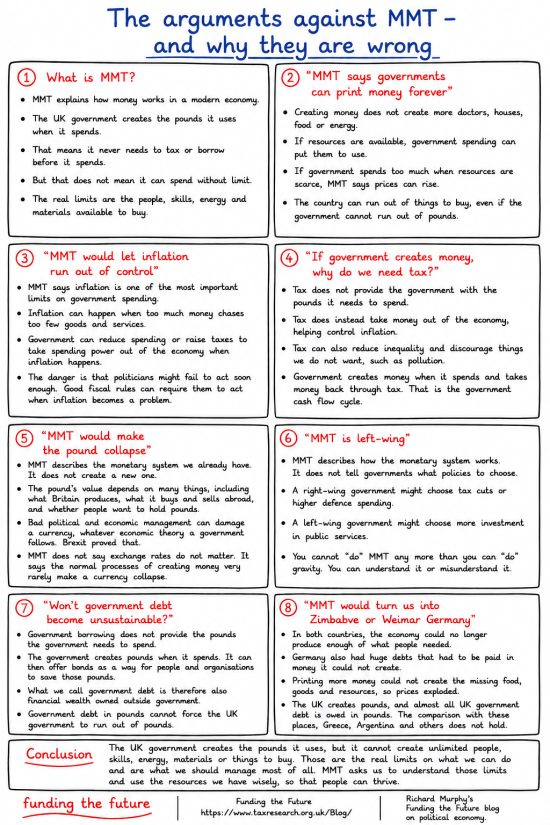
And:

How to expand this image
Press CTRL or Command and the Plus (+) key on your keyboard to zoom in. Press CTRL or Command and the 0 (zero) key together to restore the screen to normal.
How to download this image
If you right-click the image, you should be given the option to download it to your computer. So long as you do so without the intent to make a profit, you may do so without further permission. Commercial use requires consent. But if you just want to share it, do so with whoever and wherever you want. That is the purpose of these infographics.
The image library
There is a library of these images. It is available here. All downloads are free, but donations help our work.
AI use
I wrote these infographics. I used AI to create the final image.
Thanks for reading this post.
You can share this post on social media of your choice by clicking these icons:
There are links to this blog's glossary in the above post that explain technical terms used in it. Follow them for more explanations.
You can subscribe to this blog's daily email here.
And if you would like to support this blog you can, here:

 Buy me a coffee!


This excellent explanation of MMT must prompt the obvious question…. exactly who should benefit from government spending?
I would argue that since it is OUR government, instructed by and a servant of us, that we should all benefit to, at least, a reasonable level.
Currently OUR government chooses to run an economic system where a small percentage are permitted to capture and keep obscene amounts of OUR money to the considerable detriment of the majority.
The current arguments around spend it on the old or spend it on the young, spend it on war or spend it on the NHS, spend it on the homeless or spend it on immigrants, spend it on the unemployed or spend it in the care services…… it’s all so tiresome, disingenuous and unnecessary.
Thank you
Hi Richard
Thanks for these!
How should governments deal with the speculation in the secondary bond market, which is pushing up the price of long term bonds as it seems to be affecting what those in the primary market are willing to buy at? You’ve mentioned before that central banks should cut interest rates, which will help, but is there anything else besides that?
There are several things the government can do, and I think the first is to stop pretending that the secondary market dictates the terms on which the government must issue debt.
You are right that secondary-market yields influence what buyers will demand at a new gilt auction. Why would someone buy a new 30-year gilt yielding 4 per cent if an equivalent existing gilt can be bought in the secondary market yielding 6 per cent? But that does not mean government has to accept the 6 per cent demanded.
It can simply refuse to issue long-dated debt on those terms. It can issue at different maturities, change the mix of its savings products, or reduce gilt issuance altogether. The government does not need the money from the bond buyer before it can spend. The bond provides a savings instrument after the money has been created by government spending.
The Bank of England can also intervene in the secondary market if necessary, as QE demonstrated. Indeed, it created reserves to buy gilts on a very large scale after 2009. There is therefore no technical reason why excessive speculative pressure on particular parts of the yield curve has to be passively accepted.
And I would stop QT, which has been adding gilts to the market at exactly the time when the Bank should not be increasing their supply. The Bank has now itself substantially retreated from active gilt sales, which rather makes the point.
So I would amek clear the bond markets can set the price at which investors trade existing bonds with each other but they do not have an automatic right to dictate the terms on which the government chooses to provide them with new savings instruments.
There’s definitely a comedy sketch in here somewhere… Mel Smith tries to persuade all the dodgy 2nd hand car dealers in EastEnders to work together and agree to flog off their stock of mk 4 cortinas at rock bottom prices to force Ford to put up the price of a new one.
🙂
Hi Richard
There is something called the ways and means, which seems to be a facility for govt overdraft. Can you explain its use in the context of govt debt?
Try this, which I have updated in response to your query. https://www.taxresearch.org.uk/Blog/glossary-items/ways-and-means-account/