
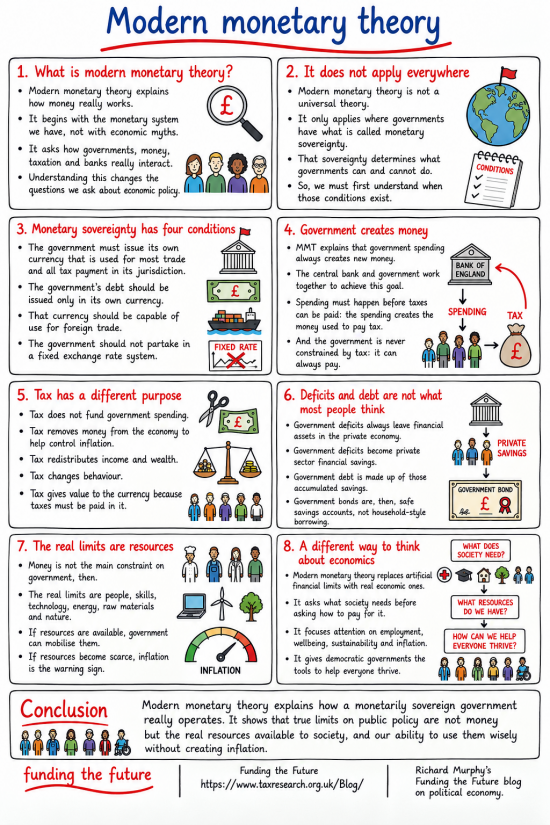
I should stress that, as with all infographics, the views expressed reflect my work and not necessarily those of others.
The above infographic replaces an earlier version that included a typing mistake, as if to prove I write these things.
How to expand this image
If you press CTRL or Command and Plus (+) on your keyboard, your browser should increase the size of your page every time you do this. Press CTRL or Command and the 0 (zero) key together to restore the screen to normal.
How to download this image.
If you right-click the image, you should be given the option to download it to your computer. So long as you do so without a view to making a profit, you may do so without further permission. Commercial use requires consent. But if you just want to share it, do so with whoever and wherever you want. That is the purpose of these infographics.
The image library
We have a library of these images. It is available here. All downloads are free, but donations help our work.
AI use.
I used AI, among other tools, when creating this post, including for spell-checking as I was writing it. I explain how I use that technology here. I also used a word processor, my brain, coffee, discussion, and about 50 years of experience observing, studying, and writing about these issues. The drawing of the infographic was about the smallest part in all of that, and I had no budget to do that in any other way.
Thanks for reading this post.
You can share this post on social media of your choice by clicking these icons:
There are links to this blog's glossary in the above post that explain technical terms used in it. Follow them for more explanations.
You can subscribe to this blog's daily email here.
And if you would like to support this blog you can, here:

 Buy me a coffee!

Typo in box 8, first bullet point ‘…..erplaces artificial…’
I am sure you are aware of this. And I despise pettiness. But just to draw it to your attention.
In Box 8, the first bullet point, there is a typo. “erplaces”, to be read as “replaces”.
P.s. These infographics are brilliant and throughly helpful to digest the information. May I suggest a dedicated page on the blog where they are all in a list to access? Or even put into a ‘booklet’.
Excellent. (There appears to be a typo in box 8 first line of first bullet point “replaces”?) Send a copy to Zack Polanski! And to Gary Stevenson to read on his flight to Japan.
Box 8 “erplaces” should be replaces
Excellent. Box 8, point 1 ‘erplaces’
The infographic I’ve been waiting for and will be sharing.
There’s a related if under-acknowledged and misunderstood aspect to the spending of money by Government, the asset physical assets created (and sometimes sold…). These represent tangible national wealth. Everything friendlier infrastructure, to hospitals to libraries.
This found in the Whole Government Accounts (WGA), which are designed to record the value of public sector assets. It’s messy, containing the financial data from over 1,000 public organisations, and the figures are open to question, especially those from Local Authorities. Nevertheless understanding the real world value of a nation’s assets is important and should attract more attention and due consideration alongside national debt (which receives way too much attention).
Good point. What the promoters of the bogus household analogy always (conveniently) overlook is not the size of the household outgoings but the value of the house. If 10 Blighty Avenue has a mortgage of £20K but its value is £100K what’s the problem? It’s only when you get into negative equity that you have a problem. Even then, the value of the UK must be more than just the total value of its physical assets. It’s really time that the household budgeteers were tackled head on to justify their continued nonsense.
No one reading your blog cares about typos but something we may download and print for distribution to others needs to be as perfect as possible. Distractions from the message are not needed and many non “Funding the Future” consumers love finding typos and making a issue of it thereby distracting from the infographic messages.
Misusing ‘Who & Whom” bothers me more but most people do not know the correct usage rules for “Who & Whom”! LOL! LOL!
Thanks for all your your hard work on the ‘Infographics”!
You’ll never be stuck for proof readers! Sorry to learn of your on-going health issue. Get well soon.
The one I’ve been waiting for, and I’m not disappointed – a certain Ms Kelton might approve?
I recently came across John Searle lecture where he address the argument that money is no longer a physical object. It is a contract created with a promise of language. And this contract needn’t be a physical object like coins, cash, a government bond. To many modern philosophers this is a kind of heresy. And it got me thinking that a lot of opposition to MMT comes from outdated philosophical stances that entirely inadequate.
[…] Infographic: MMT […]