
This infographic was included in my post on this morning's video, but I feel that it deserves an outing all on its own:
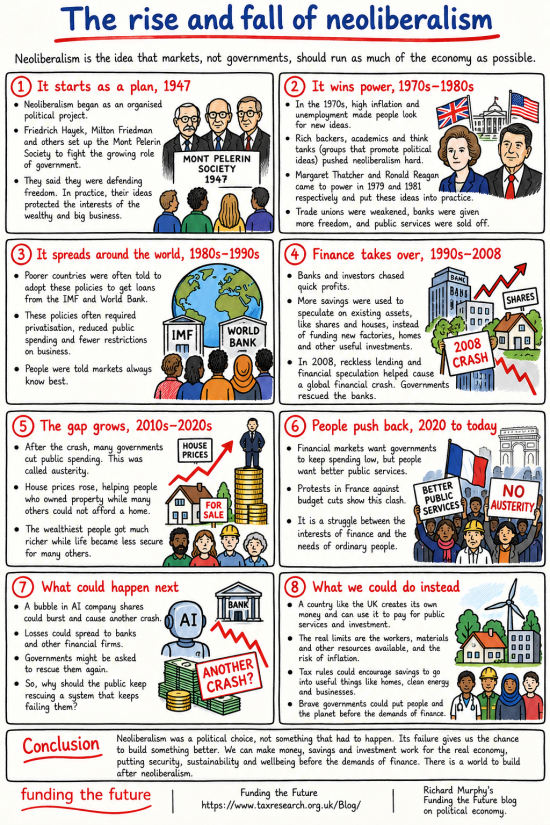
The point is, this is the time to ask what could happen next and what we can do instead.
How to expand this image
Press CTRL or Command and the Plus (+) key on your keyboard to zoom in. Press CTRL or Command and the 0 (zero) key together to restore the screen to normal.
How to download this image
If you right-click the image, you should be given the option to download it to your computer. So long as you do so without the intent to make a profit, you may do so without further permission. Commercial use requires consent. But if you just want to share it, do so with whoever and wherever you want. That is the purpose of these infographics.
The image library
There is a library of these images. It is available here. All downloads are free, but donations help our work.
AI use
I wrote this infographic. I used AI to create the final image.
Thanks for reading this post.
You can share this post on social media of your choice by clicking these icons:
There are links to this blog's glossary in the above post that explain technical terms used in it. Follow them for more explanations.
You can subscribe to this blog's daily email here.
And if you would like to support this blog you can, here:

 Buy me a coffee!


Really useful, will be sharing this. One question… How important do you consider Monetarism, and what distinction do you make between the two? For me, Neoliberalism has been identified by many as the problem, but too many fail to identify Monetarism as the economic scaffolding holding it up.
I have done other infographics and a View On (I think) on this. Use the search box to the right.
Thanks, another great infographic. Interesting that strict Monetarism itself failed, yet the political ideology it was essentially invented to propagate lives on, and with it many of the errors of Monetarism. I can’t help but feel a stronger link needs to be made between the two, and that without properly dismantling the economic theory behind neoliberalism, attempts to call it out as the problem fall short. It would be like Air Traffic control using a flat earth navigation grid, despite knowing the Earth’s round! Things would inevitably go wrong, and people blame the traffic controllers, but if their replacements and critics are still advocating for the flat earth map, nothing will ever land.
Noted
“want governments to keep spending low” needs re-working given that current spending is an all-time high
People do want better public services and the socialist approach would be to recognise financial resources are indeed an all-time high and then explain why they have to go even higher. That’s the argument the progressive street economics pundits have to make.
It would help if you got your facts right.
In nominal pounds, it is at an all-time high, but not in any other way.
And you are trolling. Goodbye.
I read this extract from a recent article by Thomas Piketty which seems highly relevant:
Noted. I will replicate that for the UK.
https://www.theguardian.com/commentisfree/2012/jun/26/robert-mundell-evil-genius-euro
In France etc as long as euro remains so does neoliberalism
” The euro would really do its work when crises hit, Mundell explained. Removing a government’s control over currency would prevent nasty little elected officials from using Keynesian monetary and fiscal juice to pull a nation out of recession.
“It puts monetary policy out of the reach of politicians,” he said. “[And] without fiscal policy, the only way nations can keep jobs is by the competitive reduction of rules on business.”
He cited labor laws, environmental regulations and, of course, taxes. All would be flushed away by the euro. Democracy would not be allowed to interfere with the marketplace – or the plumbing.”
The brexit lot are nasty racists but let’s not forget this.
I am planning a video on this.
This infographics really help me think about the systems at work.
At Box 6 my thoughts took a separate path. I increasingly view 2008 as the end point for neoliberalism, at least from a geopolitical perspective. Since then we have seen the growth of economic nationalism. By that I mean an ideology with the objectives of promoting and safeguarding a nation’s self interests within a global context. Best seen in China and exemplified by their Belt and Road Initiative and in the USA with the policies of Trump/Maga.
Two ideologies can exist at the same time. Relatively the EU is not resource rich and has found itself increasingly vulnerable and out of step with both China and the USA. Can join you again in Box 8 and add that the ‘forgotten’ resource that Government could better unlock is privately owned wealth which has grown significantly as a multiple of GDP.
Thank you