
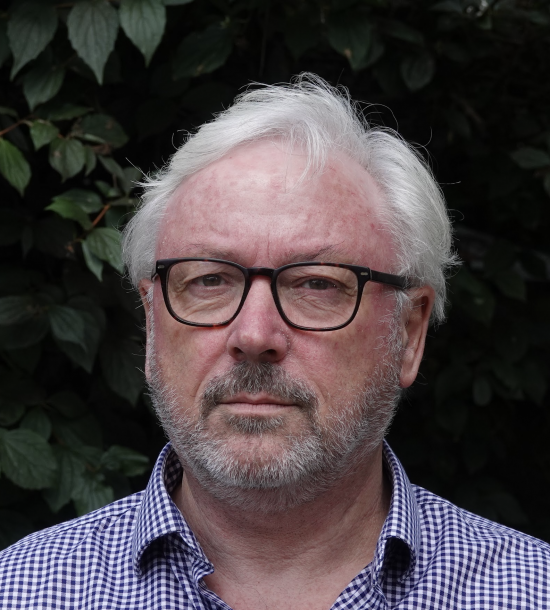
I did this podcast yesterday, even if the thumbnail picture might be a decade old:
The podcast has been viewed 64,000 times so far. That is why I do them. The message needs to be spread.
This is my summary of the discussion:
Yesterday, I joined Mario Nawfal for a wide-ranging discussion about the protests in France, the economic crisis developing across Europe, the failure of neoliberalism, the rise of the far right, and what governments must do if they are to restore economic stability and public confidence.
My central argument was that what we are witnessing in France is not simply a protest movement. It is evidence of an economic and political system that is failing increasing numbers of people. France may be where the anger is most visible, but the causes of that anger exist throughout Europe.
The protests have not emerged overnight. They reflect decades of frustration among people who have been promised prosperity, security and opportunity but have received increasingly little of any of them.
Young people are particularly affected. Many have worked hard, gained university degrees and accumulated debt, only to discover that suitable employment is unavailable. They cannot afford housing, establish independent households or plan families. Their parents are equally frustrated because the future they expected for their children, and often for their own retirement, is disappearing.
I suggested that the origins of this crisis can be traced back to the adoption of neoliberalism, symbolised by Margaret Thatcher's election in 1979.
Neoliberalism assumes that markets are the best mechanism for allocating resources and that governments should withdraw from economic activity wherever possible. It also concentrates economic power in the hands of those who already possess financial wealth.
The result has been a fundamental confusion between financial wealth and productive wealth.
Rising house prices, for example, may make existing homeowners feel richer, but they do not create additional homes. They simply make housing less affordable for everyone else.
The same problem has affected privatised infrastructure, public services and investment. Instead of creating productive capacity, neoliberalism has encouraged financial extraction, monopoly profits and the accumulation of wealth by a relatively small proportion of society.
The consequence is an economy that increasingly serves asset owners rather than the people who depend upon it for their livelihoods.
This also explains why conventional politics is failing.
Across Europe, established political parties have accepted remarkably similar economic assumptions. Whatever voters choose, they are repeatedly offered austerity, fiscal restraint and the claim that governments cannot afford to address society's problems.
I described this as the emergence of a single transferable party. Elections change the people in office without fundamentally changing economic policy.
That denial of meaningful democratic choice helps explain the rise of the far right. People understandably want an alternative, but the policies proposed by politicians such as Marine Le Pen and Nigel Farage would often intensify the economic problems that have created public anger.
I also warned that the situation could deteriorate significantly during 2027.
There are several potential crises developing simultaneously. An AI investment bubble could burst, triggering substantial stock market falls. Financial instability could spread through private equity, hedge funds and secondary banking markets. Energy supply disruptions, high oil prices, climate-related agricultural problems and potential food shortages could compound the difficulties.
These are risks rather than certainties, but their interaction could produce a crisis comparable in significance to 2008, at least.
In 2008, governments discovered that when financial capitalism was threatened, they could create the money required to rescue it. They did so, but then restored the economic system that had produced the crisis.
This time, I argued, governments must use their capacity to create money to rebuild the productive economy rather than simply rescue financial wealth.
Modern monetary theory provides an explanation of how government money creation actually works. It demonstrates that governments with monetary sovereignty are not financially constrained in the way households are. Their real constraints concern available resources, productive capacity and inflation.
That understanding creates the possibility of a different approach.
I proposed redirecting the substantial public subsidies currently provided to pension and ISA savings towards investment in productive capital. A state-backed investment institution could use those funds to support housing, education, transport, employment and the green transition.
The objective would be to turn savings into productive investment that delivers real improvements in people's lives.
Mario also asked whether immigration was contributing to Europe's difficulties.
I rejected the suggestion that immigration was the underlying cause of the economic crisis.
Migrants contribute enormously to economic activity, public services, innovation and cultural development. Although rapid changes in population can create local challenges requiring effective government responses, blaming migrants for economic failure fundamentally misunderstands what has happened.
Indeed, I suggested that hostility towards migrants is frequently strongest in places where relatively few migrants live.
The political process of identifying outsiders as responsible for society's problems distracts attention from the economic structures that have actually failed.
Neoliberalism has reduced economic opportunity, weakened democratic choice and concentrated wealth. Blaming migrants, minorities or other supposedly undesirable groups does nothing to resolve those failures.
My conclusion was that we need to restore the balance between markets, government and society.
I am not opposed to private enterprise. My career as a chartered accountant, entrepreneur and economist demonstrates otherwise. Markets have an essential role, but they require an effective state that establishes fair rules and ensures that economic activity serves the public interest.
The protests in France are a warning. People are losing confidence because governments have abandoned their responsibility to deliver economic security and opportunity.
The alternative is not simply more government spending. It is government that understands its economic powers, invests in productive wealth, restores democratic choice and gives people a credible reason to believe that their future can be better than their present.
That is the change Europe urgently needs now.
Thanks for reading this post.
You can share this post on social media of your choice by clicking these icons:
There are links to this blog's glossary in the above post that explain technical terms used in it. Follow them for more explanations.
You can subscribe to this blog's daily email here.
And if you would like to support this blog you can, here:
 Buy me a coffee!

