
This is another of the infographics that took time and quite a lot of effort to get right, or at least as good as I could make it:
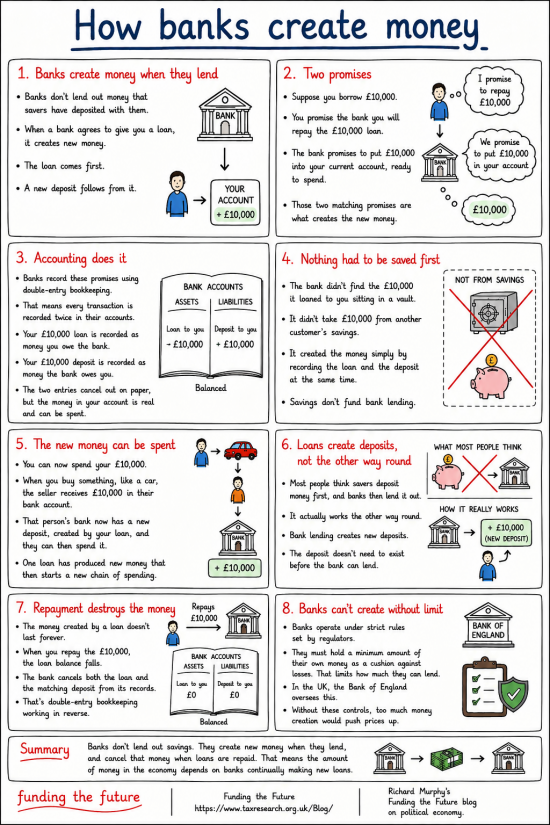
I also did an experiment and created one without the sketches. The most successful of these infographics is on neoliberalism and has no illustrations. I wondered whether that was a factor in its success, or whether that was due to the subject matter.
Might you let me have your opinion on this?
How to expand this image
If you press CTRL or Command and Plus (+) on your keyboard, your browser should increase the size of your page every time you do this. Press CTRL or Command and the 0 (zero) key together to restore the screen to normal.
How to download this image.
If you right-click the image, you should be given the option to download it to your computer. So long as you do so without the intent to make a profit, you may do so without further permission. Commercial use requires consent. But if you just want to share it, do so with whoever and wherever you want. That is the purpose of these infographics.
The image library
We have a library of these images. It is available here. All downloads are free, but donations help our work.
AI use
I wrote this infographic. I used AI to spell-check it and draw the presentation.
Thanks for reading this post.
You can share this post on social media of your choice by clicking these icons:
There are links to this blog's glossary in the above post that explain technical terms used in it. Follow them for more explanations.
You can subscribe to this blog's daily email here.
And if you would like to support this blog you can, here:

 Buy me a coffee!

I think that the sketches work with the text, but they may put untold pressure on how to edit the text and maybe inhibit the text? You’re packing a lot in. Two sided ? Or less sketching? Look, it’s so easy to be critical.
Whilst I am here – I have to nip out to do some early morning shopping before the place goes mental – I wish to record my dismay and sadness about the death of Jason Arday which I discovered last night on the internet by accident. I also then discovered just how much there was online about him including a Youtube article from ‘historian’ (more like ‘hysterical-ian’) David Starkey claiming he’d ‘exposed’ him. There was a lot of stuff being said about how Arday had ‘made people so angry’. Arday had not made people angry – if they were angry at all – it was because of the amount of attention he was getting on an unregulated internet that more likely wound people up.
I wish to say that what I find particularly egregious about this sad affair, is the legions of Neo-liberal and even Marxist economists who have been lying and misleading people about the real world for years who have and will never ever come under the scrutiny of that meted out to the late Professor Arday. These fake experts have caused more damage to our societies than anything Arday was supposed to have done and yet still remain unaccountable for their crimes and false claims – some of these charlatans and opportunists even being given Nobel prizes.
I cannot say that I am even disgusted because I am so overwhelmed by the injustice and rampant racism on show. I just feel numb……………….
Much to agree with. I, too, am saddened. I hope the Telegraph is pleased with their week’s work. They have driven a youngish, black, neurodivergent man to his death. He might have made mistakes. Who hasn’t? But he did not deserve this for the crime of being different.
This one is excellent Richard – thank you. I like it’s brevity. I especially like the beautiful parallel between savings deposits not funding loans in the same way that bonds don’t fund government spending…
Excellent.
Box 8 (on limits to lending) captures regulatory capital and the risks to inflation of excessive credit creation. I think for completeness there should be some reference to liquidity regulations…. but they are tough to sum up in a single sentence but how about…..
“They must hold a minimum amount of cash in order to meet depositors’ likely withdrawals”
Not perfect, or indeed, absolutely accurate…. but you might consider it.
PS Torn with respect to pictures. “No pictures = more space for words” (Good) or “No pictures = too visually crowded” (Bad). Can’t decide.
I tried that, but thought what I had done was fair…
This one was tough to fit in. I tried one version on regulation that got far too long…you have the compromise.
Another excellent infographic. I was going to ask for more details on the regulation of lending, though not within this infographic, something longer and detailed. A blog post on a otherwise quiet day (If there ever is one) perhaps?
That is on my ever growing list
1. On the bank lending infographic – would including “interest” totally mess it up? I think the issue of interest might come up when the infographic is shared.
2. Jason Arday. What a nasty brutish world we live in. What could possibly have motivated the editor of the Trashograph to choose to focus on the questionable credentials of THAT particular public figure?
1. No. Interest does not feature. Interest is just an appropriation of another person’s income. It does not involve money creation.
2. Good question. I am struggling to imagine……
That this is so, is confirmed by the Bank of England itself:
1:03 “It’s sometimes overlooked as the main way in which money is created — and it runs contrary to the view sometimes put forward — that banks can only lend out deposits that they already have. In fact, loans create deposits, not the other way around.” See also: “Money creation in the modern economy“, Quarterly Bulletin 2014 Q1 @ Bank of England
Thank you
I agree on the mechanics of bank loans; there can’t really be any dispute.
I know you and many others say that bank loans create money but I disagree. I think they create liquidity, and increase the velocity of money, but do not create new money.
Why do I take this heterodox view? Because bank loans are are always balanced in double entry bookkeeping; each loan has a balancing debt. The total change in money, taking account both loan and debt, is zero. So I struggle to see how that is creating new money.
If I lend a friend money that is sitting in my bank account I don’t think many people would say that creates new money – yet the mechanism is the same. My loan does increase liquidity because the money was sitting in my account and would not have been spent. And, yes, I’m limited in the amount I can loan, but so is a bank, just less so. I don’t think that’s a fundamental difference.
So I guess we disagree. But, perhaps, worth saying, because I think reasonable people can disagree and that this is a potential source of confusion when discussing economics.
You are entirely wrong Tim. Velocity of many slows is the current reality as money creation rises. And what is liquidity? More claims in a double ledger entry – that is it.
What you are denying is the existence of money itself, and that is absurd. You are right in that money is no thing – or nothing – as all claims add to Xperia, but the quantum of the claim is what money. That is why you are not just wrong, but totally wrong. ANd even liquidity is the differential of the change in the quantum, and a liquidity crisis is a function of the second differential, so your suggestion makes no sense.
Tim
The answer is surely closer than you think – it’s in your own reasoning. One way to look at this is that the money is created twice – in the banks own ledger (records) and then out into the real world via someone’s bank account. The loan was created to be spent – not just put into an account to debate why it is there. It’s there to be used. It is spent as real money, and has real money effects – like inflation, sales figures, profit, GDP, tax, new stuff.
That is my reaction anyway. ‘Happy to be put right – I try to have a positive attitude to learning.
I agree with that.
I don’t wish to argue and I don’t expect you to agree. And, I am in a minority. But, perhaps, I thought, it is worth replying. If I disagree, others may have similar thoughts. I hope we agree that we want people to understand, so that they will push back against the egregious inequality in modern society.
Setting aside whether bank lending is “money creation”, because I don’t think arguing semantics is important; it’s the understanding that’s important. My observation is that bank lending that creates money/liquidity is temporary.
Banks lend as much as they can to make a profit and this is largely determined by their assesment of whether the borrower is likely to repay the loan. Generally there is a shortage of credit worthy borrowers and that’s what restricts borrowing. In a bubble, perhaps, bank lending is limited by the money they hold to maintain stability and cope with potential bank runs.
But bank money “creation” has to be paid back. Before that happens it seems as if money has been injected into the economy. But after a while when people have borrowed as much as they can, that stops. Even with zero interest borrowers still have to repay the capital and that sets an finite limit on what can be borrowed. And when new borrowing stops, and if the government doesn’t create money, then the economy stalls. And, after nearly 50 years of neoliberalism, is what we are rapidly approaching.
I hope you may agree with some of that. I hope you may see why people may be confused. Because, unlike government money creation, which is unlimited and permanent, bank money creation is temporary and limited. There does seem, to me, to be a distinction between the two cases.
I agree with some of this, Tim, and I think the distinction you are making is useful, but think you draw the wrong conclusions.
Commercial bank money creation is inherently associated with debt. All money is debt. That is why.
When a bank makes a loan, it creates a deposit and therefore new money. As the capital on that loan is repaid, that money is cancelled. So, yes, bank-created money has a life cycle that is directly related to the loan that created it.
And you are also right that banks cannot expand lending indefinitely. There comes a point when increasing private indebtedness cannot sensibly provide the additional money an economy needs, but this source ion funding is not fading away as you suggest. That would require mortgages to disappear, and that is not going to happen soon.
Where I would disagree is in describing government-created money as necessarily permanent. Government spending creates new money without simultaneously creating a debt owed by the recipient to the government. That is the crucial difference. But taxation subsequently cancels some of that money. So government-created money can also be removed from circulation.
The fundamental distinction is therefore not really temporary versus permanent. It is what obligation accompanies the money when it is created.
Bank lending creates money alongside a private obligation to repay the bank. Government spending creates money without imposing an equivalent repayment obligation upon the person receiving it. Taxation is a separate obligation created by law and used, amongst other things, to cancel money and manage inflation.
And I agree with your broader point. An economy cannot sensibly depend upon ever-increasing private borrowing to provide the money it needs. That is one reason why understanding the government’s role in money creation matters so much.
Thank you 🙂
It’s interesting stuff. I can’t critique the content because I don’t know enough about it, but the internal arguments are cogent. But I would say the maximum downloadable resolution is small at 768×1152, that is if you might envisage this and the others in the series as printed out laminates of, say, A3 size on the walls of a high-school economics class – I wish we had had such resources for ‘Higher Economics’ back in the day!
These infographics are very useful resources, though, and I couldn’t agree more about the need to refocus school learning on the learning you’re going to need in real life.
As a tiny note, the URL and first lines cite “inforgraphic”; we’ll put that down to “I used AI to spell-check it” 😉
AI checks my posts – but not the headlines for some odd reason.
Another excellent job Richard. I know these infographics must take a lot of thought, time and effort but, I for one, think well worth it as there is nothing out there that I know of that comes anywhere close to explaining all this vital information so clearly and concisely. Again, I thank you
Thank you. They are hard work and sometimes very frustrating, but I enjoy making them.
[…] posting yesterday's infographic on how banks create money by lending, there were questions and challenges, both here and on […]
This is a complex issue. Well done for trying to set out the basics.
For me point 3 is key to understanding how banks are allowed to create money, some say out of nothing. However that is not really the case, because of exactly what you point out. Banks create a legal loan agreement with the borrower which the borrower signs , promising to repay the loan plus interest. That legal loan document is now an asset to the bank. They put it on the asset side of their ledger. They can actually sell this “asset” to other financial institutions or even put it up as collateral for a loan themselves. Mortgages,which makes up more than half of all bank lending, can be sold to third parties as they were done in prolific amounts prior to 2008.
So bank money creation is not out of nothing, it actually creates a real asset for the the bank. This is the key to understanding how banks have operated since their inception some 400 years ago.
Point 8. Sometimes banks really have no limits on lending.For example ,in a boom they make extra profit, some of of which they do use to retain for regulatory reasons, i.e a buffer against bank runs.This enables practically limitless lending in a boom.The only real limit being lack of demand for loans themselves.
Of course in a recession or bank crash these buffers swiftly dwindle as borrowers default and asset(property)prices fall. Banks then struggle to maintain enough of a buffer.
So whether these buffers,so called capital ratios, are set high enough is another debate.As the financial crisis of 2008 more than amply demonstrated.
Thank you