
We went goosing this morning.
I am not sure goosing is a word, but it is in the Murphy household. Geese are high on our list of favourite birds.
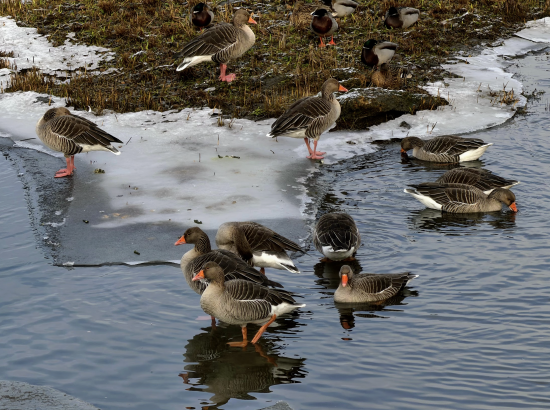
These are greylags, but there were also pink foot and tundra bean geese at WWT Welney this morning, the latter being a first for me there. Both were also well out of my camera range, but were great to see.
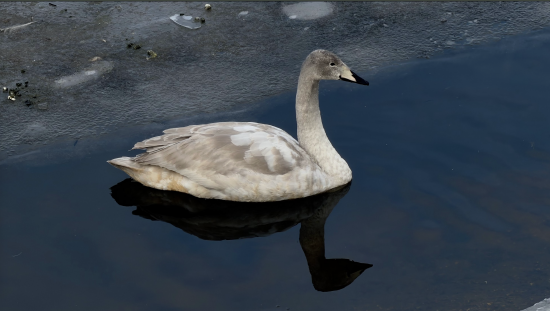
This is not a goose, of course. It is a whooper swan cygnet, but I just like it. These youngesters have an appeal all of their own:
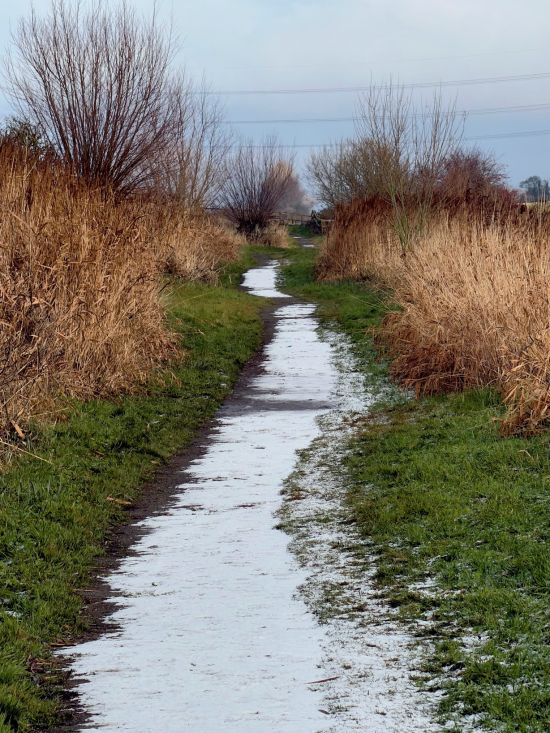
It was very cold, there having been snow overnight:
The views, ice and light were amazing:
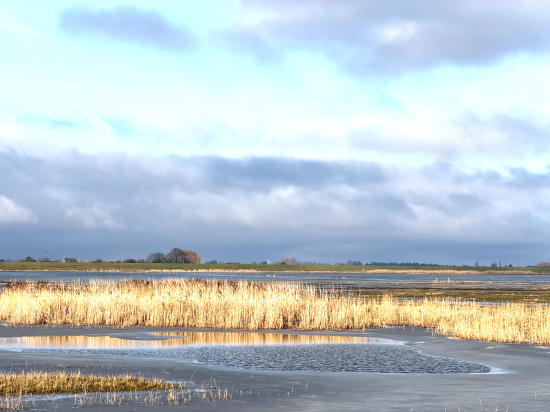
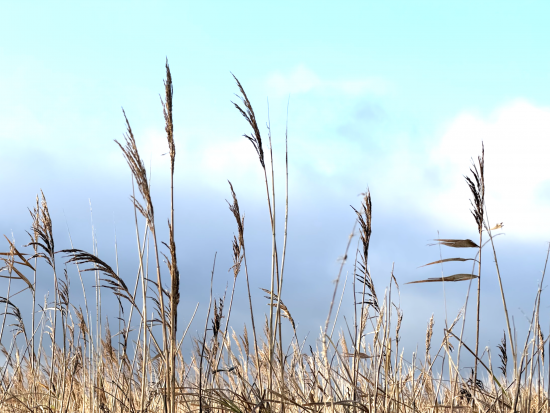
And it was time to play with the light and foliage. These are reeds, which are still providing seed for the resident reed buntings, who are picking them as they are windblown off the adjacent path:
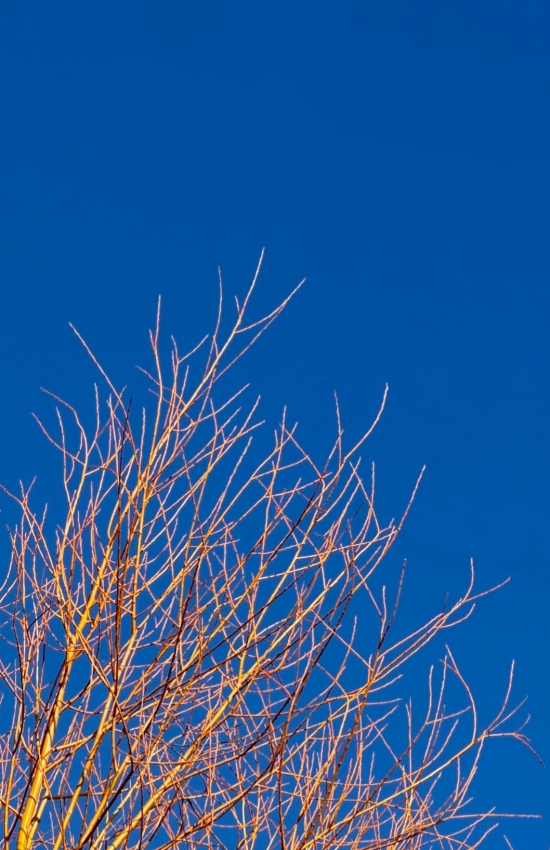
And this is cornus (dogwood). I have not edited the colours:
I admit, time spent out in the open helped me considerably today.
Comments
When commenting, please take note of this blog's comment policy, which is available here. Contravening this policy will result in comments being deleted before or after initial publication at the editor's sole discretion and without explanation being required or offered.
Thanks for reading this post.
You can share this post on social media of your choice by clicking these icons:
There are links to this blog's glossary in the above post that explain technical terms used in it. Follow them for more explanations.
You can subscribe to this blog's daily email here.
And if you would like to support this blog you can, here:

 Buy me a coffee!

You need the Urban Dictionary……….
That’s not mmy usage…
Goosing is indeed a word, Richard. Many women of my age who grew up in male-dominated professions can attest to that…..
🙂
What a lovely, peaceful place to visit! As somebody who loves open skies and wide, flat vistas, this seems perfect. I would love to live near here. And I always enjoy your wildlife pictures, including, here, the ‘ugly duckling.’
If you get a chance, I would love to see some photos of eider ducks. I’ve never seen an eider duck with my own eyes (yet) and I think they are beautiful ducks. They are on my bucket list of UK wildlife to ‘see’ at some point.
By the way, where I originally come from, ‘goosing’ IS a word. But it means administering a pinch on the bum! …usually to get somebody to pick up the pace or simply move along! I suppose I can understand where that term originated. Geese (and swans) can be …erm …persistent …in moving tresspassers out of their territory.
I am heading to the Scottish coast in spring. I will try to find an eider then.
This is the last I saw – in Southwold Harbour in December 2024. https://www.taxresearch.org.uk/Blog/wp-content/uploads/2026/01/Screenshot-2026-01-10-at-18.56.01.png
I have a good friend who lives on North Uist. Magic place for birds. I’ve seen Golden Eagles raising chicks, Hen Harriers, many smaller birds – AND Eider in the harbour at Lockmaddy.
I don’t believe in bucket lists, but I’d like to go.
If you are looking for Eider ducks try the Carr Rocks at Seacliff Beach just past Tantallon Castle near North Berwick on the south side of the Firth of Forth in East Lothian. There used to be lots of them there.
That sounds good.
I used to go to Seahouses for them.
Yes indeed, Goose was my brother’s nickname for me for over 50 years. He finally asked me if I minded it….and hasn’t called me it since.
Noted.
But we just mean we’re going looking for geese….
This reminds me of a conversation years ago, not that long after I moved up to Aberdeen. We (a friend I’ll call JM and I) visited a lady (the wife of an elder at the local church) and asked after her husband.
Her: “Oh, you’ve just missed him. I’ve just seen him off with his fancy piece.”
JM: “Fancy piece?”
Her: “Of course”
JM: “And you KNOW?!”
Her: “Well of course I do…”
Sound of pennies dropping – a piece is used in Scotland to mean some sort of food (tea & a piece can mean biscuits, sandwiches etc). Apparently a fancy piece (to them) was a really nice cake.
Context is everything!
I’m glad you enjoyed the… erm… birding specifically for geese(!) The photos are beautiful.
Agreed
And I am happy with the context in which we use the word
On the stretch of the upper river Wey, Surrey-Hampshire border, we have a large flock of Canada geese. But resident for the last few years are a beautiful pair of Egyptian geese, strangely unafraid of humans so they let you get quite close for photos. Plus a lone egret – been here quite a few years but sadly lost its mate. And a cormorant, wondering where the sea is!
Makes the daily dog walk interesting. Surrey is surprisingly rural and not quite its stereotype. The most wooded county in Britain and much of it ancient woodland.
I had a time in Surrey – in woods – and know you are right. I walked the route of the Wey and Arun canal once. Egyptian geese are escapes, of origin. They can be very unafraid. I was at Roehampton University a year ago, and one walked around the campus, seeking to open automatic doors and make its way in.
I live close to the WWT at Arundel as well as Pagham Harbour. If you want geese, the Brent geese are a sight to behold as they fly into the harbour every evening at sunset from wherever it is inland they spend the day. A sight that makes your heart soar.
This is one of the great things about geese – they do that
They do indeed make my heart soar. I live on a flight path between the Solway and the Lakes and rush into the garden when I hear the honk! A special bird called ‘sky borne socialists’ by singer/songwriter Karine Polwart, (song Labouring and Resting from the album A Pocket of Wind Resistance).
“ Outstretched wing tips of every migrating bird creates an up wash, a pocket of wind resistance for the bird tucked in behind and below. These nooks of ease, aerodynamic sanctuaries, cut the drag by up to 65%. It’s a wonder and a gale bitten struggle to sustain cooperation. Every goose takes a turn, stepping up, falling back, labouring and resting. Like sky borne socialists no lone bird bears the brunt. It’s a gorgeous symbiotic dance, stepping up, falling back, labouring and resting.” Beautiful!
It always makes me sad to hear a lone honk, they rely on each other and work together for the common good. Us humans could learn a thing or two from watching geese!
Thanks – and that description is 100% confirmed by experience. I have watched many skeins. We had a lone pink yesterday at Welney. The last time I saw them here there were maybe 5,000 – a more natural state of affairs.
Beautiful pictures, Richard, thank you for sharing them. I must get some binoculars or a monocular so I can see what is making all the wonderful noises on mudflats and on distant water-margins hereabouts.
Cornus has opposite pairs of twigs (and therefore buds), so I think your last photo may be a willow. I love both at this time of year for their colourful young stems. Glorious.
Noted re willow. I will check. I am not that good in trees, I admit.
And binoculars are worth it. Even cheaper pairs from people like the RSPB are worth having. I use Hawkes and have never been disappointed. I can’t work out the benefits of the really expensive makes, and I have tried them. Binoculars just open different worlds.
I keep an indifferent pair of binos in the car, and usually take a pair when I’m out and about. I have one pair which were my father’s, so must be >50 years old. Kept on the windowsill to watch yachts in the Solent.
My “proper” binos are from the USSR, exchanged in Berlin for a bottle of Hine cognac. They’re heavy, but I’ve discovered bino/camera harnesses, which are very lightweight and take the weight off the neck.
I’m now trying to work out how (and why) I acquired so many pairs.
I’ve also just invested in a small astronomical telescope, which is currently focussed on the bird feeders. A fluffy ball of long tailed tits turned up yesterday.
Long tailed tits are great.
Usually found in tens…never alone
We had some yesterday in our garden – always a treat
Thanks for the binocular recommendation…………and nice pictures.
I think it’s white willow
Thanks
Plenty of eider at Forvie National Nature Reserve just north of Aberdeen last week.